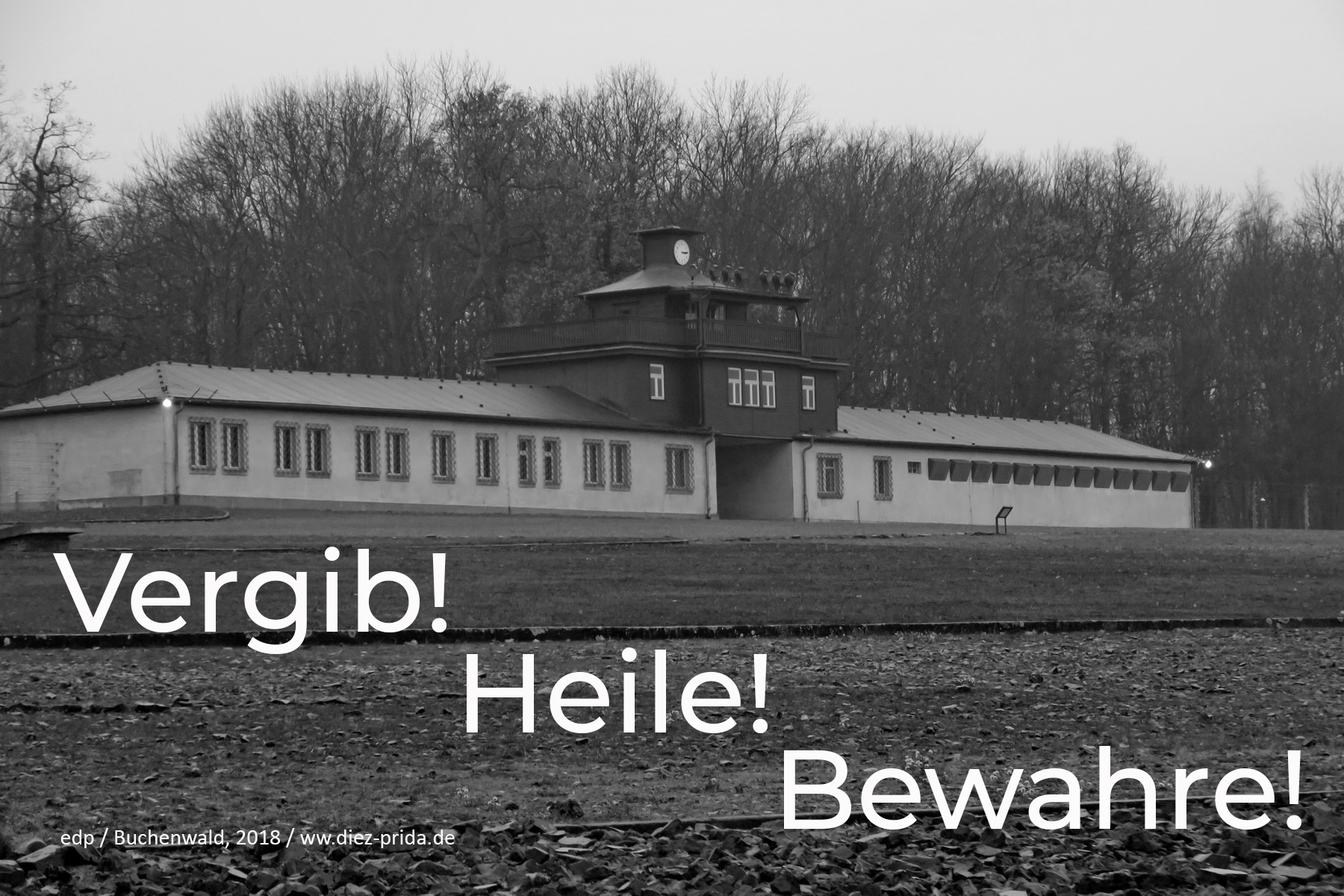
 [nx_spacer size=“10″]Vergib, Herr, was Menschen Menschen angetan haben; denn sie wussten nicht, was sie taten.
Heile, Herr, die Wunden, die heute noch schmerzen; denn nur du kannst die Seele heilen.
Bewahre uns davor, Herr, zu vergessen, damit wir uns nicht verführen lassen.
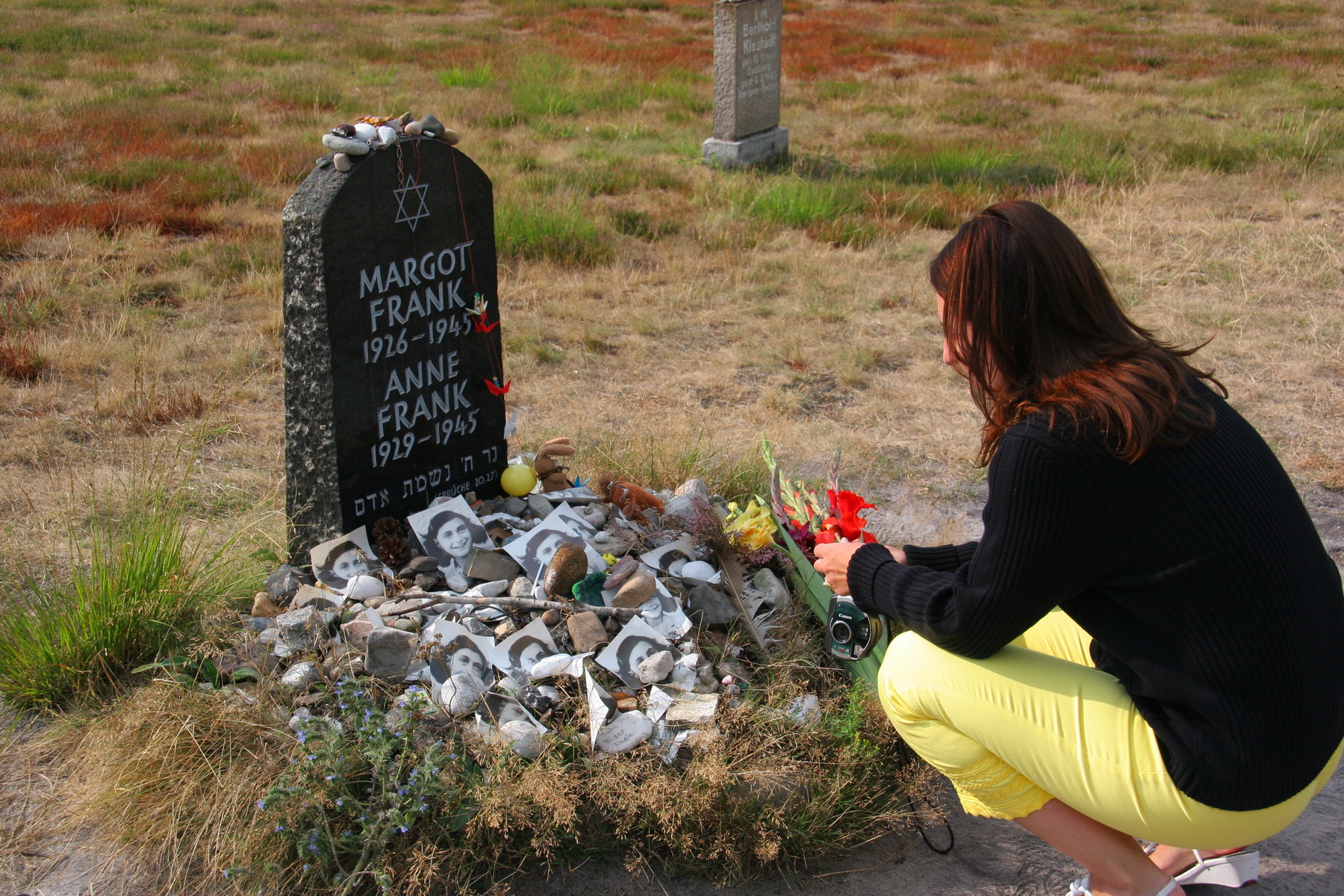
Am 11. April vor 75 Jahren wurde das Konzentrationslager in Buchenwald (bei Weimar) befreit. Zwischen Juli 1937 und April 1945 waren dort etwa 266.000 Menschen aus allen Ländern Europas und aus der Sovjet Union inhaftiert. Über 56.000 Menschen starben an Folter, medizinischen Experimenten und Auszehrung.
Als die Amerikaner im April 1945 Buchenwald und seine Außenlager erreicht haben, schrieb Dwight D. Eisenhower, der Oberbefehlshaber der Alliierten Streitkräfte: „Nichts hat mich je so erschüttert wie dieser Anblick.“
Nach der Befreiung wurden von einem US-Militärtribunal 22 Todesurteile ausgesprochen, vollstreckt wurden nur neun.
Eine Erklärung aus Anlass des 75. Jahrestages der Befreiung kann hier online unterschrieben werden.
Weitere Fotos (erstes Bild anklicken, um die Vorschau auszulösen; ein Klick auf dem i unterhalb des ersten Bildes zeigt eine Kurzbeschreibung bei allen Bildern):
Am 30. November 2018 habe ich in Verbindung mit einer Vortragsreise in Weimar zum zweiten Mal die Gedenkstätte Buchenwald besucht. Wie bereits beim ersten Mal vor mehr als 30 Jahren war ich entsetzt von dem, was ich sah, hörte und las. Es ist für mich immer noch unfassbar, zu welchen Gräueltaten zivilisierte Menschen in der Lage sind.
Der Philosoph Thomas Hobbes schrieb im 17. Jahrhundert: „Der Mensch ist ein Wolf für den Menschen“. Auch wenn dieser Satz sich vom Kontext her auf das Verhältnis der Staaten zueinander und ihre kriegerischen Auseinandersetzungen bezieht, so beschreibt dieses Bild sehr treffend, wozu Menschen in der Lage sind, wenn sie der Triebkraft des Bösen nicht widerstehen.
Diese Triebkraft des Bösen zum Bösen wohnt dem Menschen inne, seit dieser sich von seinem Schöpfergott emanzipiert hat. Es ist so, als hätten wir zwei Seelen in unserer Brust (Goethes Faust!). Analog zum andauernder Streit zwischen Gut und Böse auf der Erde, spielt sich ein innerer Kampf in unserem Herzen ab. Die Frage ist, wem wir das Sagen über unsere Gedanken, Beweggründe, Lebenseinstellung und Lebensziele überlassen.
Dieser Streit wird – global wie persönlich – erst zu Ende gehen, wenn Gott seine endgültige Herrschaft sichtbar bei der Rückkehr von Jesus Christus auf die Erde aufrichtet. Dann wird Gott das Böse und den Urheber des Bösen, Satan, vernichten. Bis dahin kann (und muss) jeder höchstpersönlich entscheiden, welcher Macht er sich ausliefert. Wer sich für Gott entscheidet, wird nicht gleich perfekt, fehlerfrei, sündlos. Aber er erlebt, wie die Beziehung zu seinem Schöpfer ihn heilt, verändert und auch bewahrt.

Forgive, Lord, what men have done to men, for they knew not what they did.
Heal, Lord, the wounds that still hurt today, for only you can heal the soul.
Beware us, Lord, from forgetting, that we may not be deceived. Picture
On 11 April 75 years ago, the concentration camp in Buchenwald (near Weimar) was liberated. Between July 1937 and April 1945, about 266,000 people from all European countries and the Soviet Union were imprisoned there. Over 56,000 people died of torture, medical experiments and emaciation.
When the Americans reached Buchenwald and its subcamps in April 1945, Dwight D. Eisenhower, Commander-in-Chief of the Allied Forces wrote: „Nothing has ever shocked me as much as this sight.“
After liberation, 22 death sentences were handed down by a US military tribunal, only nine were carried out.

Perdona, Señor, lo que hombres han hecho a hombres, porque no sabían lo que hacían.
Cura, Señor, las heridas que aún hoy duelen, pues sólo tú puedes curar el alma.
Protéjenos, Señor, del peligro de olvidar el pasado, para que no nos dejemos engañar. Foto
El 11 de abril hace 75 años, el campo de concentración de Buchenwald (cerca de Weimar) fue liberado. Entre julio de 1937 y abril de 1945, alrededor de 266.000 personas de todos los países europeos y de la Unión Soviética estuvieron encarceladas allí. Más de 56.000 personas murieron por tortura, experimentos médicos y desnutrición.
Cuando los americanos llegaron a Buchenwald y sus subcampos en abril de 1945, Dwight D. Eisenhower, comandante en jefe de las fuerzas aliadas escribió: „Nada me ha impactado tanto como lo que he visto aquí.“
Tras la liberación, un tribunal militar estadounidense dictó 22 sentencias de muerte, de las que sólo nueve fueron ejecutadas.

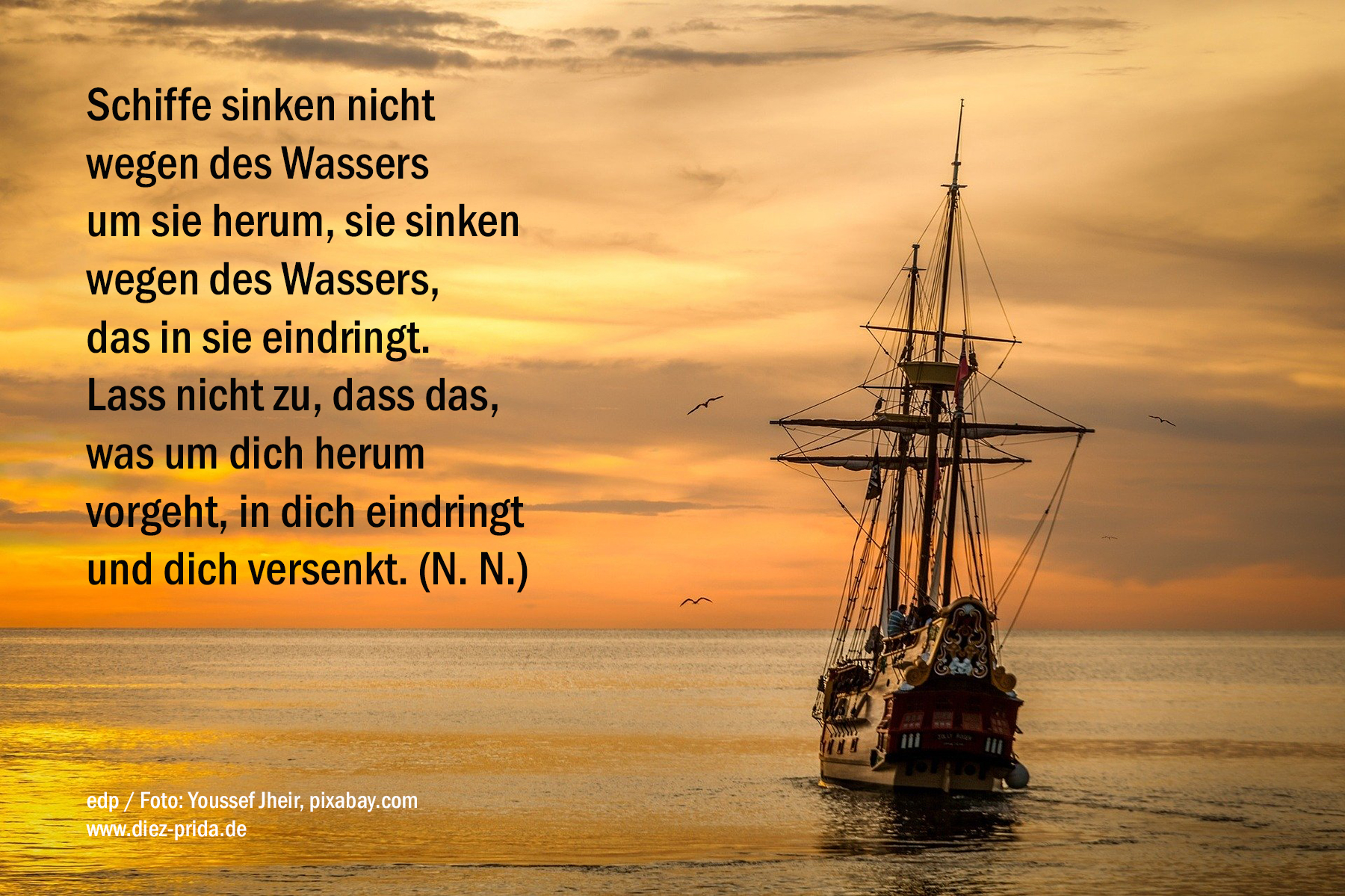 [nx_spacer size=“10″]Schiffe sinken nicht wegen des Wassers um sie herum, sie sinken wegen des Wassers, das in sie eindringt. Lass nicht zu, dass das, was um dich herum vorgeht, in dich eindringt und dich versenkt. (N. N.)