Kategoriearchiv: Articles

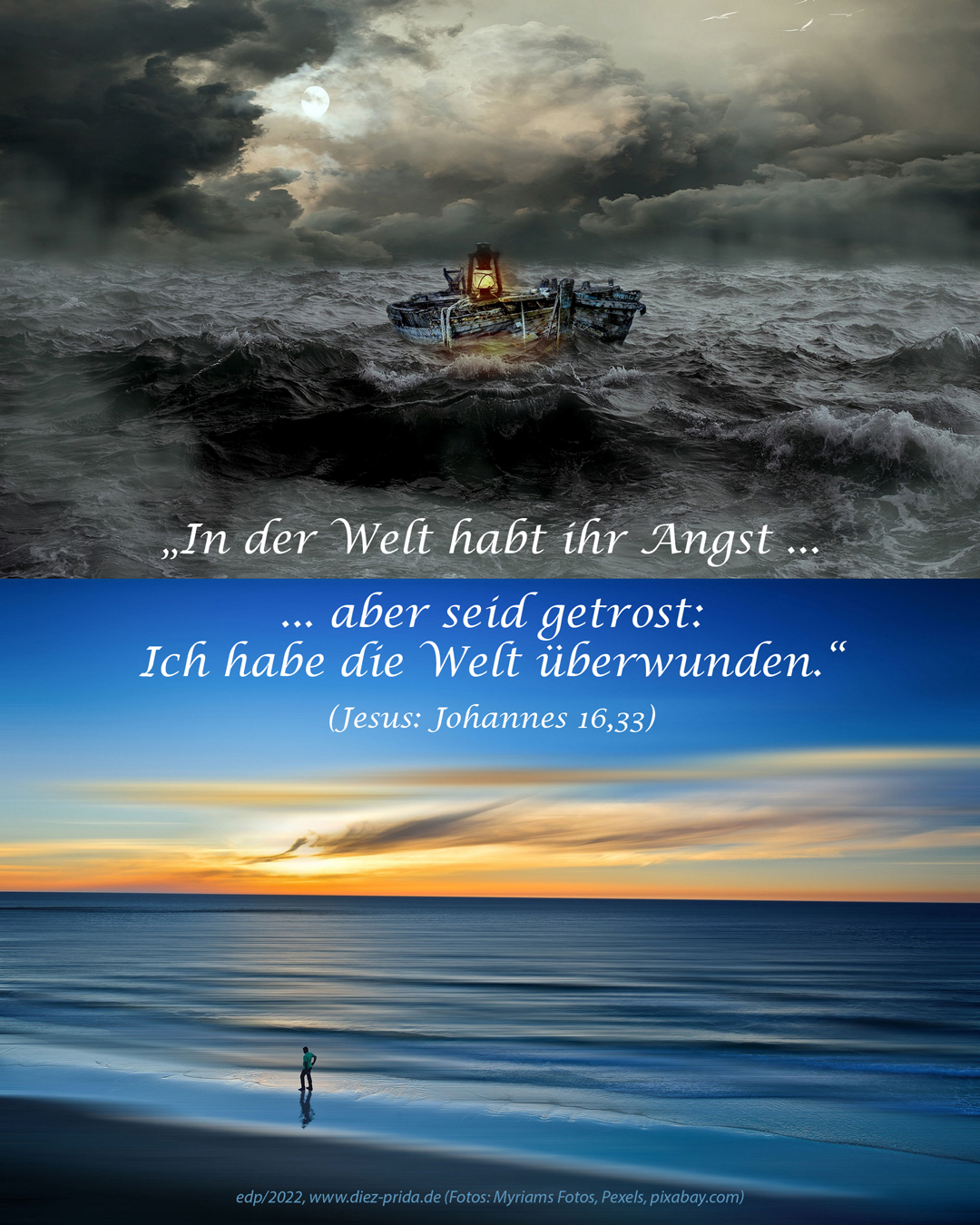
„In der Welt habt ihr Angst, aber …“

[nx_spacer]

 [Only German]

Hast du als Kind Angst im Dunkeln gehabt? Bei Nachtgeländespielen habe ich Interessantes erlebt: Die Pfadfinder, die tagsüber am lautesten und mutigsten waren, wurden auf einmal ganz klein und still. Und plötzlich war in der Dunkelheit des Waldes eine kleine Hand zu spüren, auf der Suche nach einer größeren Hand … Der Wald wurde nicht heller dadurch, dass man die Hand eines Erwachsenen festhielt, aber allein diese Berührung vermittelte ein Gefühl der Sicherheit und Geborgenheit.

Gibt es auch Augenblicke in deinem Leben, in denen auch du dich nach so einer starken Hand sehnst, die dich schützt und festhält? Die dir die Gewissheit vermittelt: Löse dich nicht in Sorgen auf! Meine Hand hält nicht nur das Ruder der Geschichte fest, sondern ich breite sie auch unter dir aus, damit du nicht untergehst im Sturm des Alltags, in der Dunkelheit von Leid, Krankheit oder scheinbar aussichtslosen Problemen.

  • Das war das Thema meiner letzten Predigt. Hier kann man sie lesen, hören und/oder sehen.

Jede Woche Urlaub

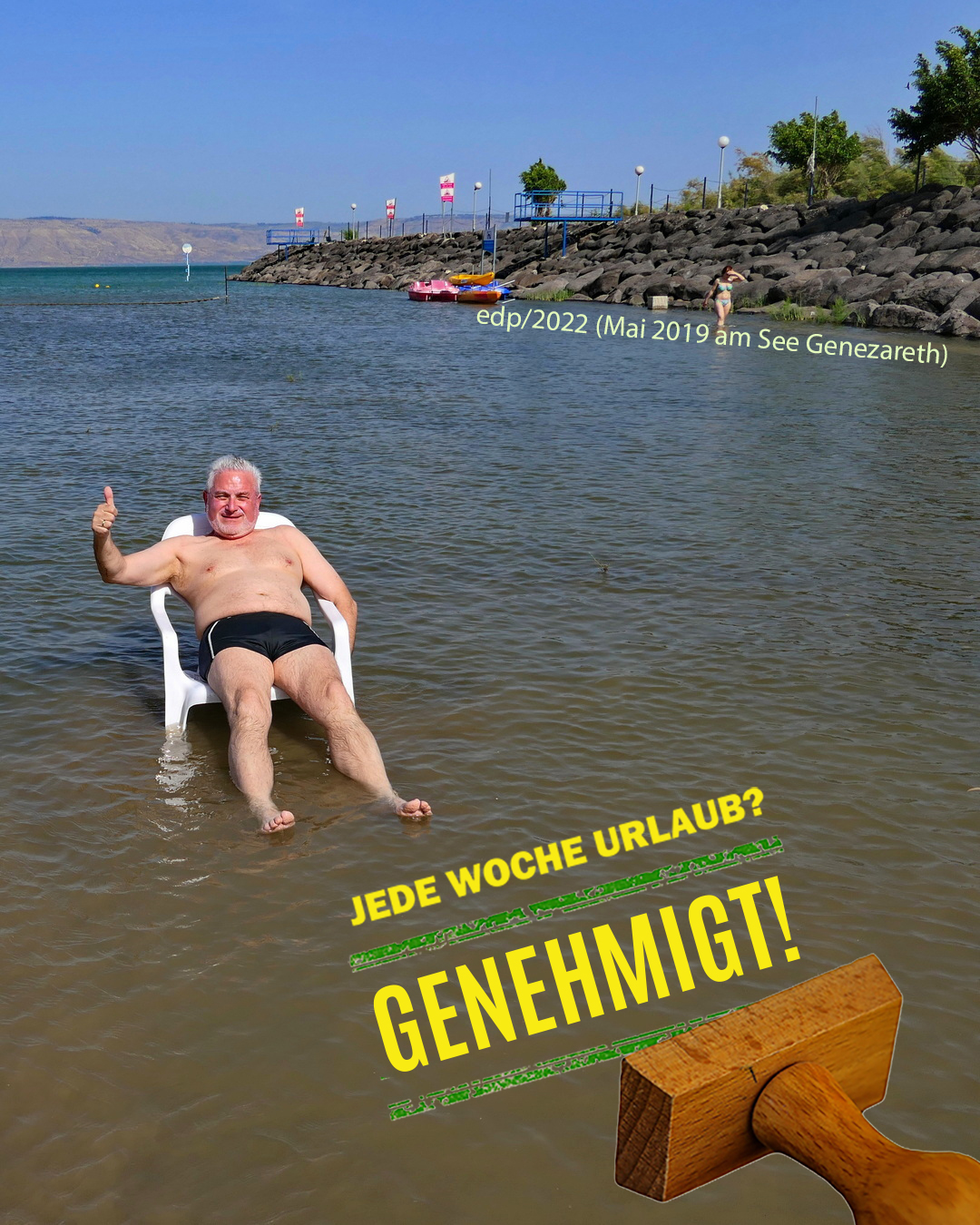
Foto: Ginosar Beach am See Genezareth

[nx_spacer]

English / Español

Jede Woche Urlaub? Genehmigt!
Die Griechen warfen den Juden vor, faul zu sein, weil diese sich einen Tag Urlaub pro Woche „genehmigten“: den Shabbat.

Gott gibt uns jede Woche frei, damit wir zur Ruhe kommen und in seiner Nähe, in der Natur und bei Gleichgesinnten auftanken können. Ein wunderbares Geschenk Gottes, der Sabbat!


Every week’s holiday? Approved!
The Greeks accused the Jews of being lazy because they „allowed“ themselves one day of holiday per week: the Shabbat.

God gives us every week free so that we can rest and recharge in His presence, in nature and with like-minded people. A wonderful gift from God, the Sabbath!


 ¿Cada semana vacaciones? ¡Permitido!
Los griegos acusaban a los judíos de ser perezosos porque se „permitían“ tomar un día de fiesta a la semana: el Shabbat.

Dios nos da cada semana un día libre para que podamos descansar y reponer fuerzas en su presencia, en la naturaleza y con personas afines. Un maravilloso regalo de Dios, el sábado.

Woher beziehe ich meinen Wert?

[nx_spacer]

English / Español

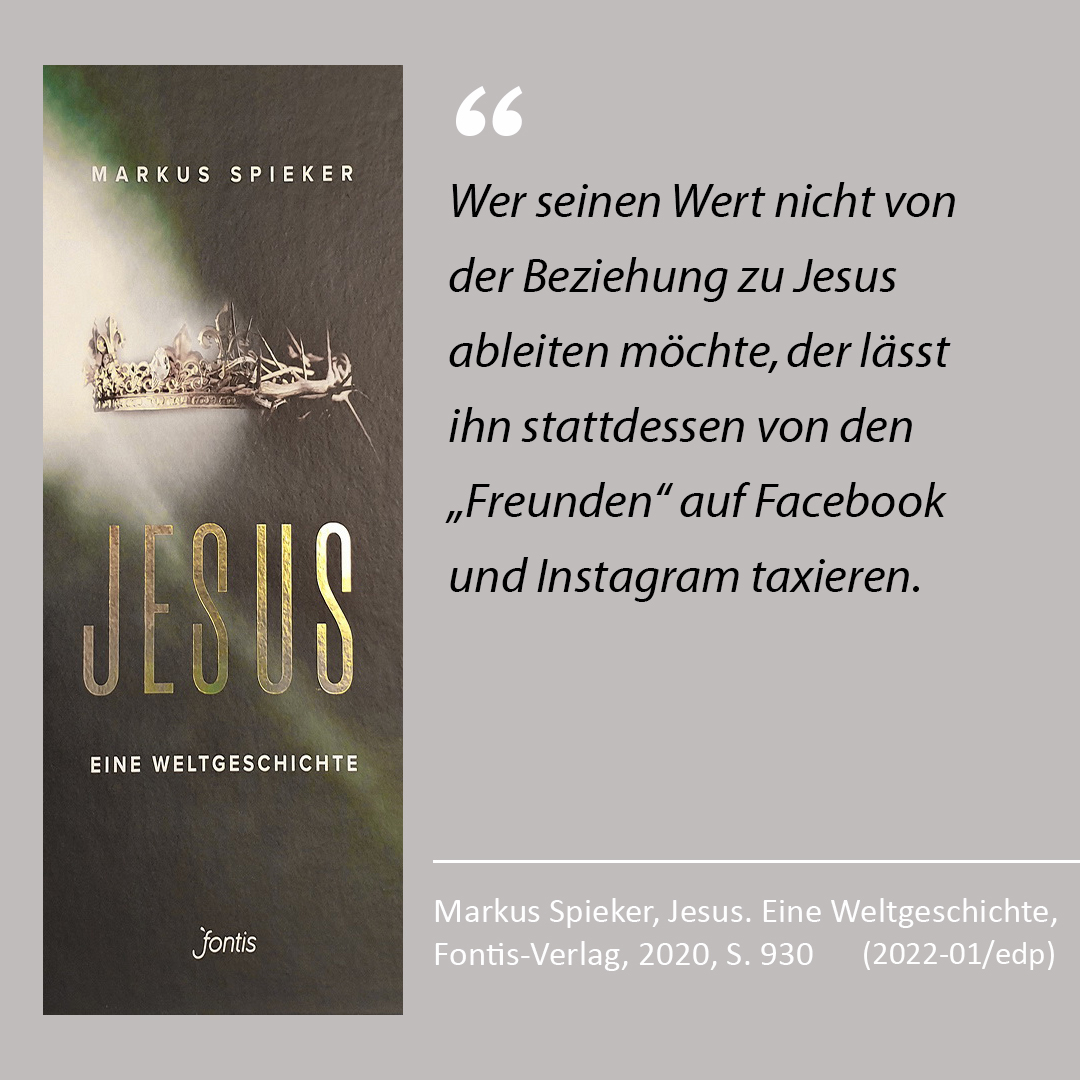
Wer seinen Wert nicht von der Beziehung zu Jesus ableiten möchte, der lässt ihn stattdessen von den „Freunden“ auf Facebook und Instagram taxieren. (Markus Spieker, JESUS. EINE WELTGESCHICHTE, S. 930)

Aus voller Überzeugung kann ich JESUS nur empfehlen, die Person und auch das Buch von Markus Spieker, das ich am Freitag zu Ende gelesen habe. Weil ich mich von Jesus bedingungslos geliebt weiß, weiß ich auch, dass ich unendlich wertvoll in den Augen Gottes bin. Das ist so befreiend! Und so hilfreich, um einen gesunden Selbstwert auch in Krisenzeiten zu bewahren!


Where do I derive my value from?
Those who do not want to derive their value from their relationship with Jesus instead have it assessed by their „friends“ on Facebook and Instagram. (Markus Spieker, JESUS. EINE WELTGESCHICHTE, p. 930)

With full conviction I can only recommend JESUS, the person and also the book by Markus Spieker, which I finished reading on Friday. Because I know I am unconditionally loved by Jesus, I also know that I am infinitely precious in the eyes of God. That is so liberating! And so helpful in maintaining a healthy self-esteem even in times of crisis!

 abcd


¿De dónde obtengo mi valor?
Los que no quieren derivar su valor de su relación con Jesús, en cambio, lo dejan evaluar por sus „amigos“ en Facebook e Instagram. (Markus Spieker, JESUS. EINE WELTGESCHICHTE, p. 930)

Con plena convicción puedo recomendar a JESÚS, tanto la persona como el libro de Markus Spieker, que terminé de leer el viernes. Porque sé que Jesús me ama incondicionalmente, también sé que soy infinitamente valioso en los ojos de Dios. ¡Esto es tan liberador! ¡Y tan útil para mantener una sana autoestima también en tiempos de crisis!

Wenn alles Kopf steht …

[nx_spacer]

English / Español

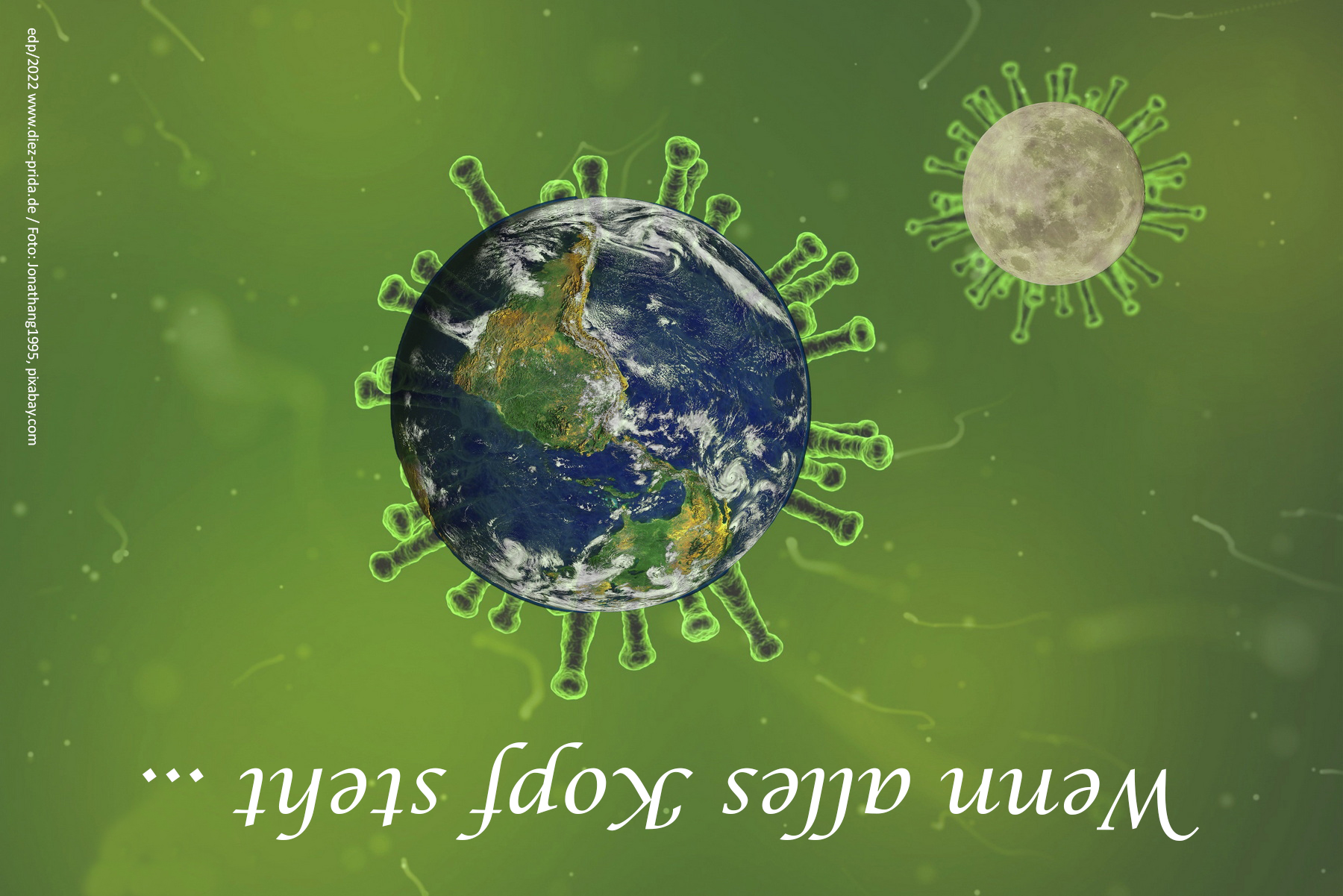
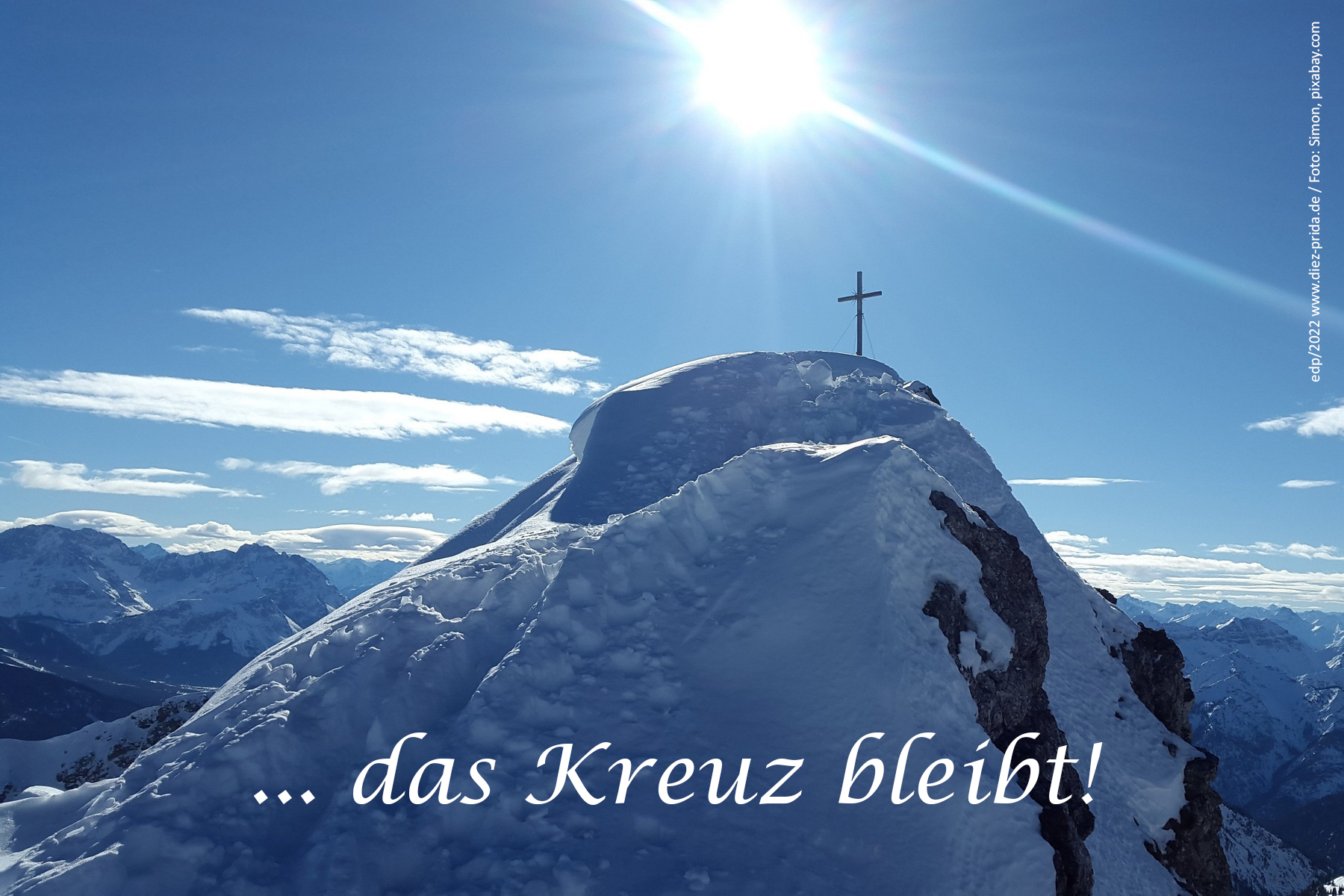
Heute gelesen: „Wenn alles Kopf steht – das Kreuz bleibt. Der am Kreuz A zu dir gesagt hat, wird auch B sagen und dich durch Krisen hindurchtragen und in eine gute Zukunft führen.“
(Studienheft zur Bibel, Der Brief an die Hebräer, S. 31; Adventisten studieren zurzeit weltweit den Hebräerbrief aus dem Neuen Testament.)

In dieser turbulenten Zeit gibt es nur eine Person, der wir absolut vertrauen können: Dem, der am Kreuz starb, weil er versprochen hatte, unser Versagen auf sich zu nehmen und unsere Schulden zu bezahlen. Und weil er auferstanden ist, wissen wir: Er hat Krankheit, Tod und Sünde besiegt – auch wenn wir noch unter den Folgen unserer Trennung von Gott zu leiden haben.

Die Pandemie wird gewiss ein Ende haben. Und die Ungerechtigkeit, das Leid, der Hass, der Hunger und vieles mehr auch. Weil ER es versprochen hat: Jesus Christus! „Siehe, ich mache alles neu!“ (Offenbarung 21,5)


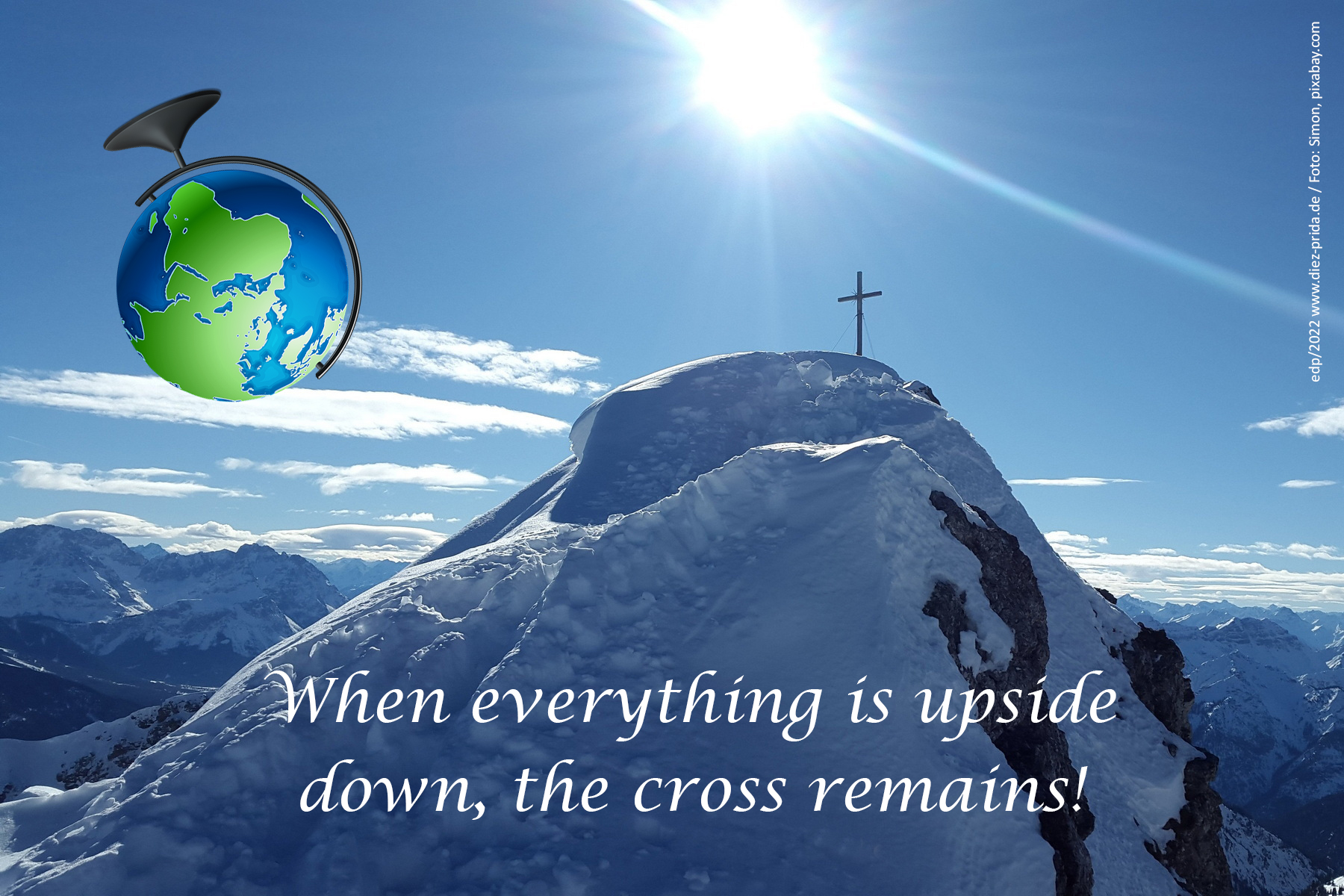
Read today: „When everything is upside down, the cross remains. He who said A to you on the cross will also say B and carry you through crises and lead you into a good future.“
(Bible Study Guide, The Letter to the Hebrews, p. 31, German FiD edition. Adventists around the world are currently studying the Epistle to the Hebrews from the New Testament.)

In these turbulent times, there is only one person we can trust absolutely: The one who died on the cross because he promised to take our failures upon himself and pay our debts. And because he rose from the dead, we know: He has conquered sickness, death and sin – even if we still suffer the consequences of our separation from God.

The pandemic will certainly come to an end. And so will injustice, suffering, hatred, hunger and much more. Because HE has promised it: Jesus Christ! „Behold, I make all things new!“ (Revelation 21:5)

 abcd


Leí hoy: „Cuando todo está al revés, la cruz permanece. El que te dijo A en la cruz también te dirá B y te llevará a través de las crisis y te conducirá a un buen futuro.“
(Folleto de Estudio de la Biblia, La Carta a los Hebreos, p. 31, edición FiD alemana. Los adventistas de todo el mundo están estudiando actualmente la Epístola a los Hebreos del Nuevo Testamento.)

En estos tiempos turbulentos, sólo hay una persona en la que podemos confiar absolutamente: El que murió en la cruz porque prometió asumir nuestros fracasos y pagar nuestras deudas. Y porque resucitó de entre los muertos, lo sabemos: Él ha vencido la enfermedad, la muerte y el pecado, aunque nosotros todavía suframos las consecuencias de nuestra separación de Dios.

La pandemia llegará sin duda a su fin. Y también lo harán la injusticia, el sufrimiento, el odio, el hambre y muchas cosas más. Porque ÉL lo ha prometido: ¡Jesús! „¡He aquí que hago nuevas todas las cosas!“ (Apocalipsis 21:5)

Die Tür ist offen. Dauerhaft!

[nx_spacer]

English / Español

Die Tür ist offen. Dauerhaft!

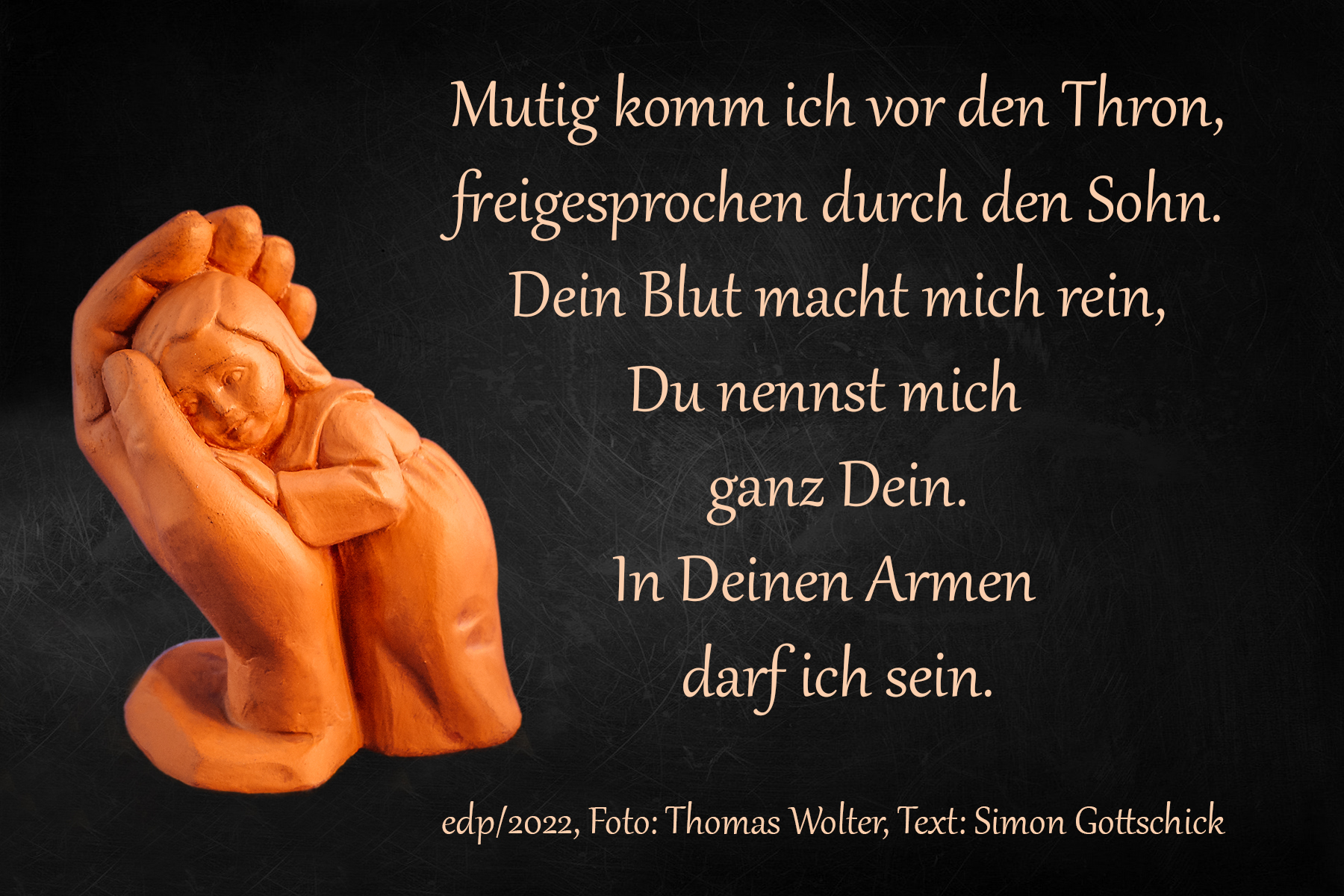
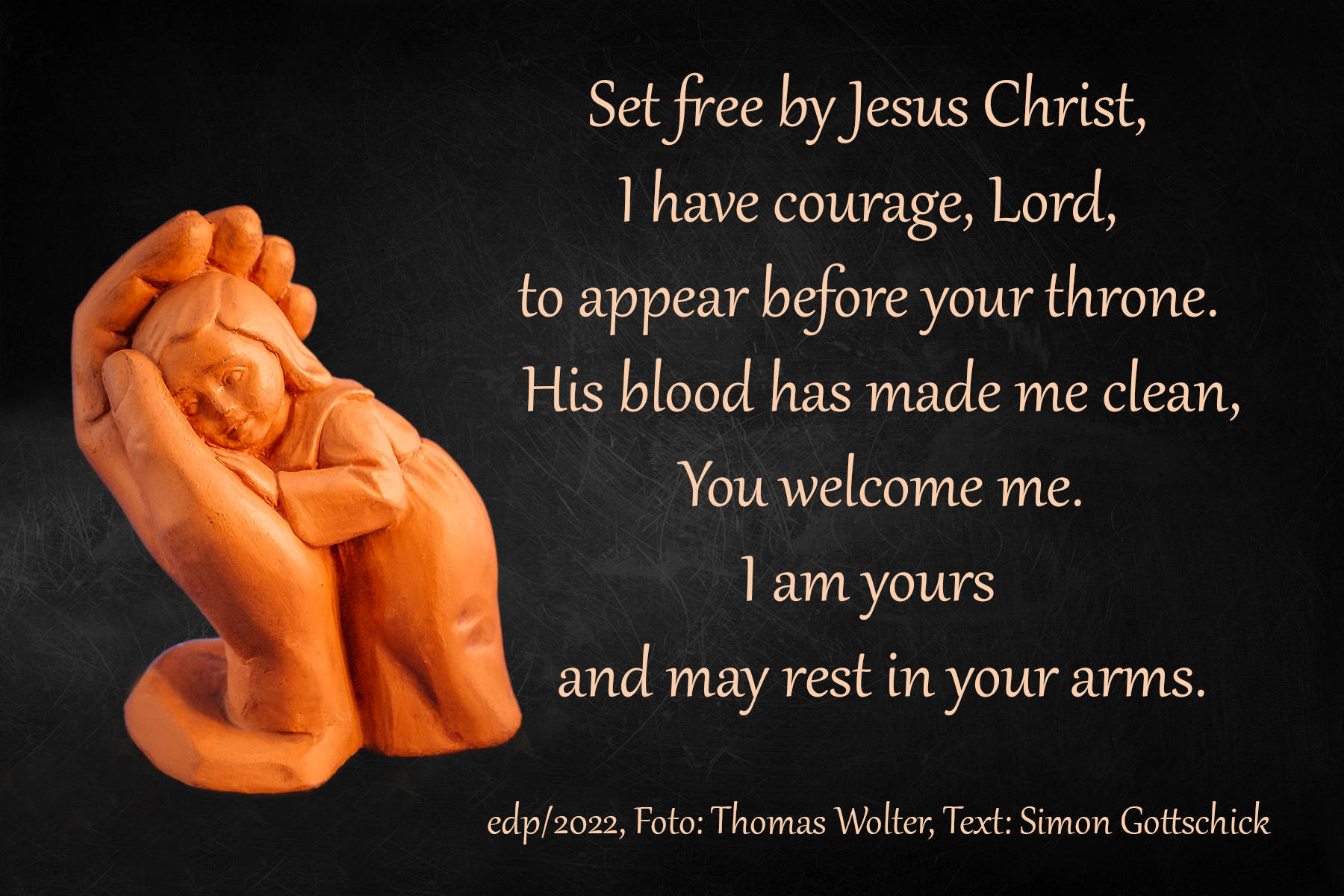
Adventisten studieren zurzeit weltweit den Hebräerbrief aus dem Neuen Testament und unterhalten sich darüber im Bibelgespräch (gewöhnlich vor der Predigt; während der Corona-Pandemie gibt es Ausnahmen). Im Studienheft wurde dieser Woche das schöne Lied „Mutig komm ich vor den Thron“ [Gottes] zitiert.

Ist das nicht selbstverständlich, dass wir zu jeder Zeit durch das Gebet die Nähe Gottes aufsuchen dürfen? Nein, ist es nicht, denn als Sünder würden wir die Gegenwart des heiligen Gottes nicht eine Sekunde ertragen. So durfte im Volk Israel niemand den heiligsten Raum der Kultstätte betreten, ausgenommen der Hohepriester, und das einmal im Jahr (am sogenannten Yom Kippur).

Eine der vielen guten Nachrichten des Hebräerbriefes lautet: Jesus Christus hat uns durch seinen Tod die „Brücke“ zurück zum Vater gebaut. Weil er unsere Sünden auf sich genommen hat, dürfen wir die Nähe Gottes aufsuchen – so häufig und so lange wir wollen. Ohne irgend einen Mittler (außer Jesus Christus selbst).

Dieser freie Zugang, diese „Öffnung“ würde zu alttestamentlichen Zeiten die Gläubigen jubeln lassen. Wie aber empfinden wir? Haben wir uns vielleicht daran gewöhnt, sodass dieser direkte Zugang zu Gott zur Selbstverständlichkeit geworden ist?


The door is open. Permanently!

Adventists around the world are currently studying the Epistle to the Hebrews from the New Testament and talking about it in the Bible discussion groups (usually before the sermon; there are exceptions during the Corona pandemic). In this week’s study booklet, a beautiful song was quoted. (Free translation of a part of the song see the photo.)

Is this not obvious, that we may seek out the nearness of God at any time through prayer? No, it is not, for as sinners we would not bear the presence of the holy God for a second. Thus, among the people of Israel, no one was allowed to enter the holiest room of the place of worship, except the high priest, and that once a year (on what is called Yom Kippur).

One of the many good messages of the Letter to the Hebrews is: Jesus Christ has built the „bridge“ back to the Father for us through his death. Because he took our sins upon himself, we are allowed to seek God’s nearness – as often and as long as we want. Without any mediator (except Jesus Christ himself).

This free access, this „opening“ would have made believers rejoice in Old Testament times. And yet, how do we feel? Have we perhaps become accustomed to it, so that we take for granted this direct access to God?

 abcd


La puerta está abierta. Permanentemente.

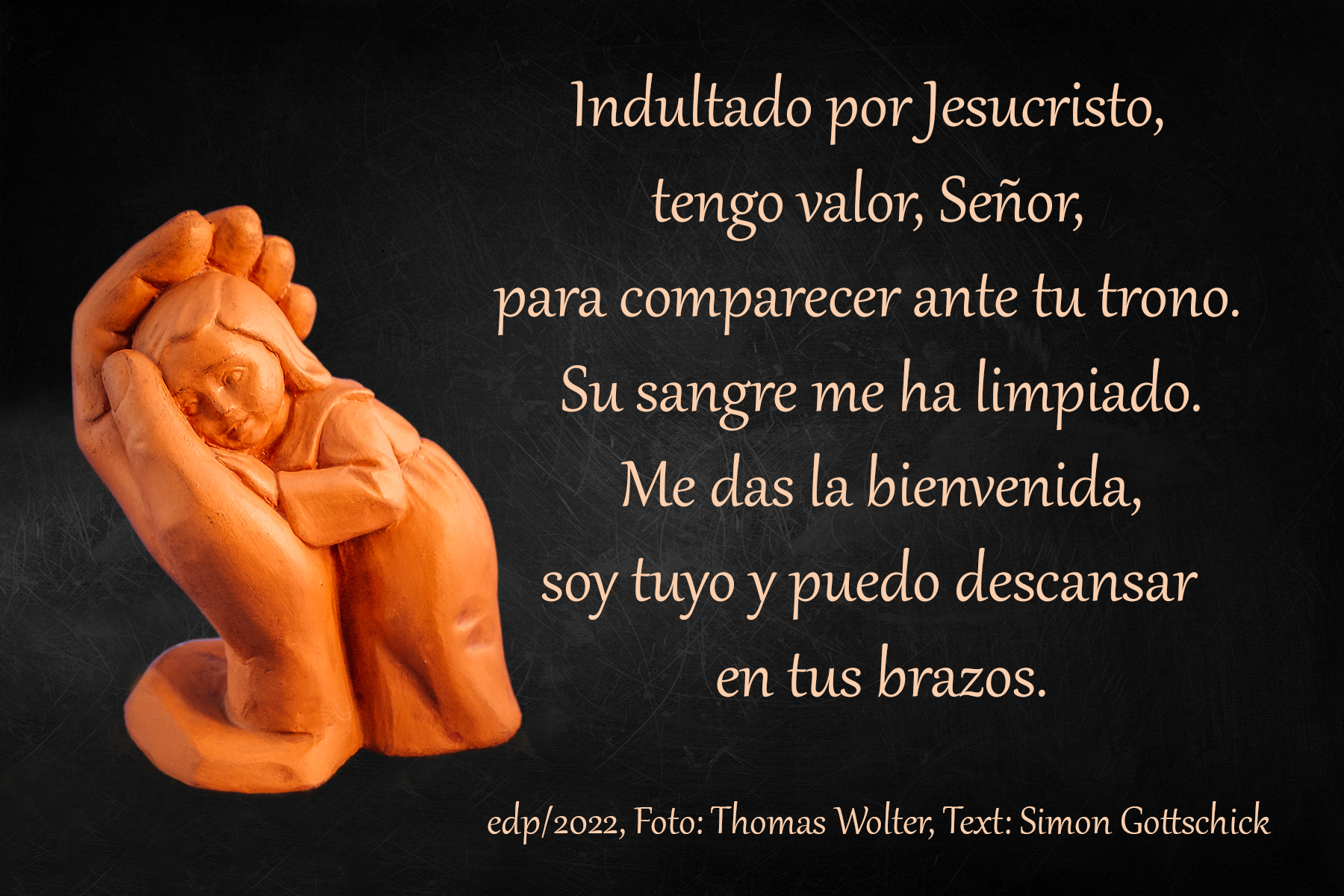
Los adventistas de todo el mundo están estudiando actualmente la Epístola a los Hebreos del Nuevo Testamento y conversando sobre ella en sus cultos. En el folleto de estudio de esta semana, se citó una hermosa canción, de la que una parte cito en esta foto.

¿No es evidente que podemos acudir a la presencia de Dios en cualquier momento a través de la oración? No, no lo es, porque como pecadores no soportaríamos la presencia del Dios santo ni un segundo. Así, en el pueblo de Israel, nadie podía entrar en el lugar santísimo, excepto el sumo sacerdote, y eso sólo una vez al año (en el llamado Yom Kippur).

Uno de los muchos y buenos mensajes de la Carta a los Hebreos es: Jesucristo ha construido el „puente“ de regreso al Padre a través de su muerte en la cruz. Porque él tomó nuestros pecados sobre sí mismo, podemos acudir a la presencia de Dios – tan a menudo y tanto tiempo como queramos. Sin ningún mediador (excepto el propio Jesucristo mismo).

Este libre acceso, esta „apertura“ habría hecho regocijarse a los creyentes en los tiempos del Antiguo Testamento. Y nosotros, ¿cómo nos sentimos? ¿Acaso nos hemos acostumbrado a ello, de modo que este acceso directo a Dios se ha convertido en algo obvio?

Mach einfach Pause. Jede Woche!

[nx_spacer]

English / Español

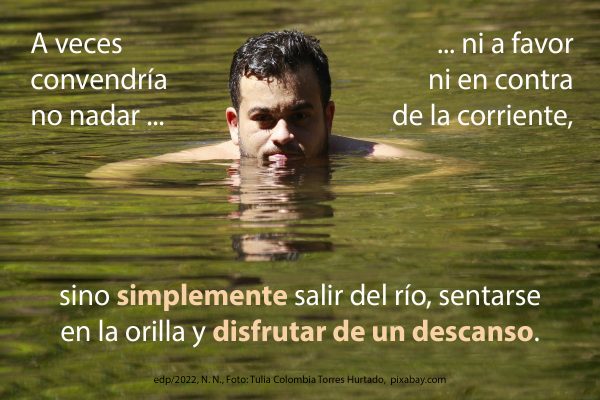
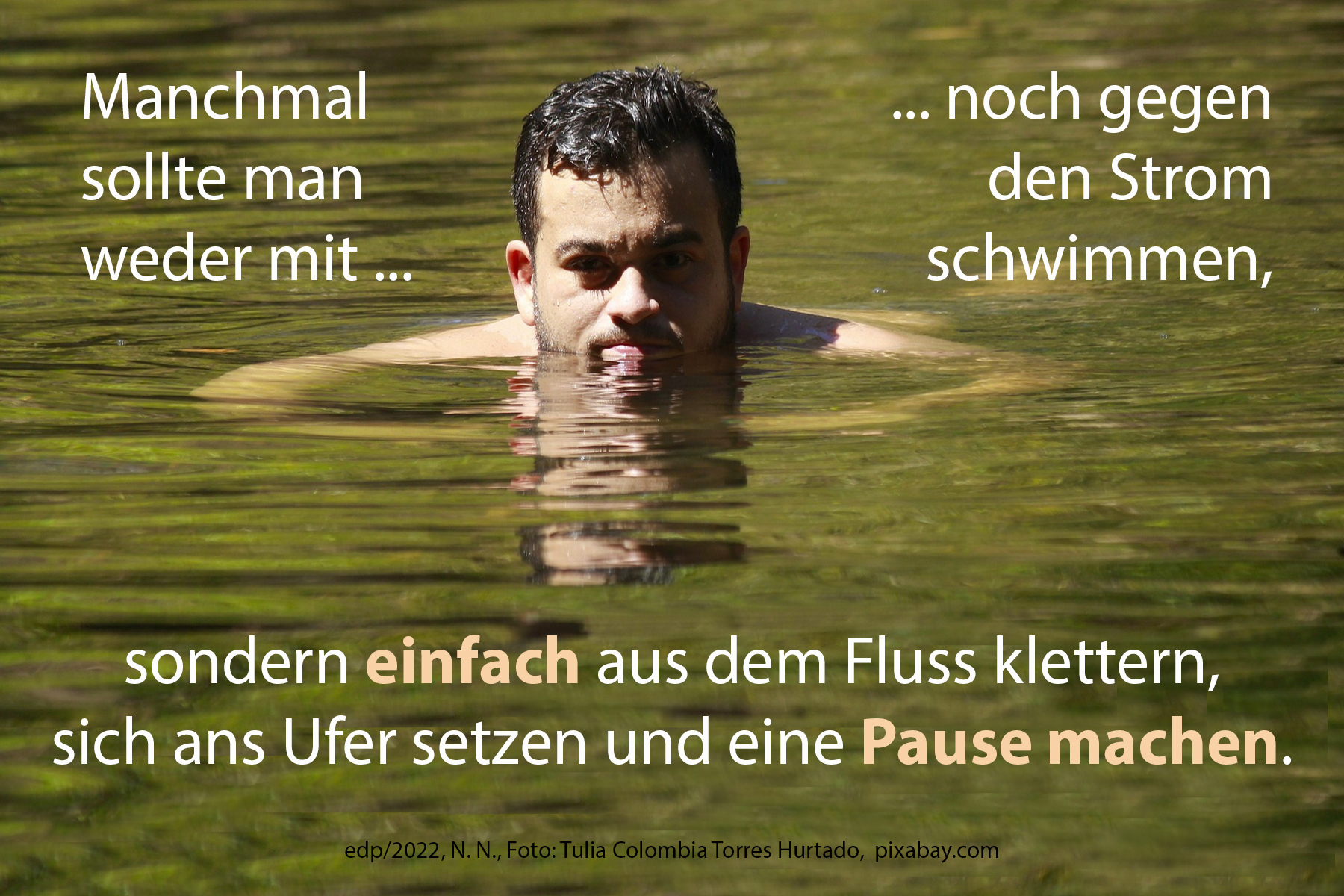
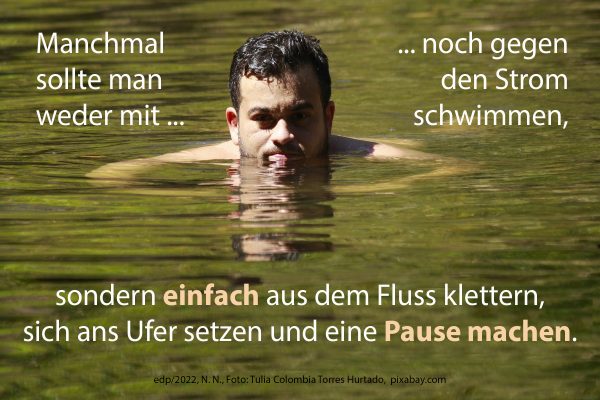
„Manchmal sollte man weder mit noch gegen den Strom schwimmen, sondern einfach aus dem Fluss klettern, sich ans Ufer setzen und eine Pause machen.“ N.N.

Für solch eine Pause bietet sich der Sabbat bestens an. Er ist Gottes wirksamste Impfung gegen die Viren der Arbeitssucht, der Faulheit, des Narzissmus und des Burnouts.
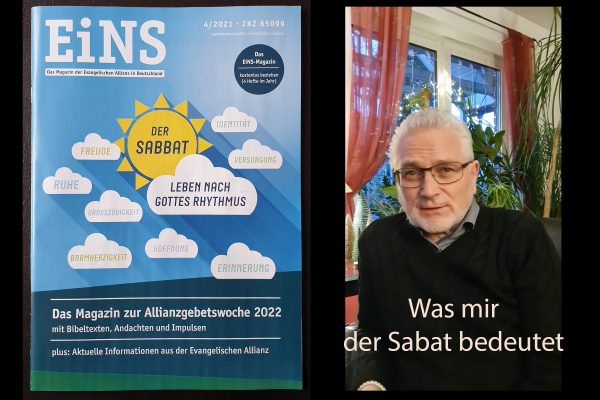
Was mir der Sabbat bedeutet, erzähle ich in einem Videoclip (ca. 3 Min.), den ich für die diesjährige Gebetswoche der Evangelischen Allianz in Lüneburg erstellt habe. Sie beginnt am 9. Januar und hat als Thema „Der Sabbat: Leben nach Gottes Rhythmus“.

 

Simply take a break. Every week!

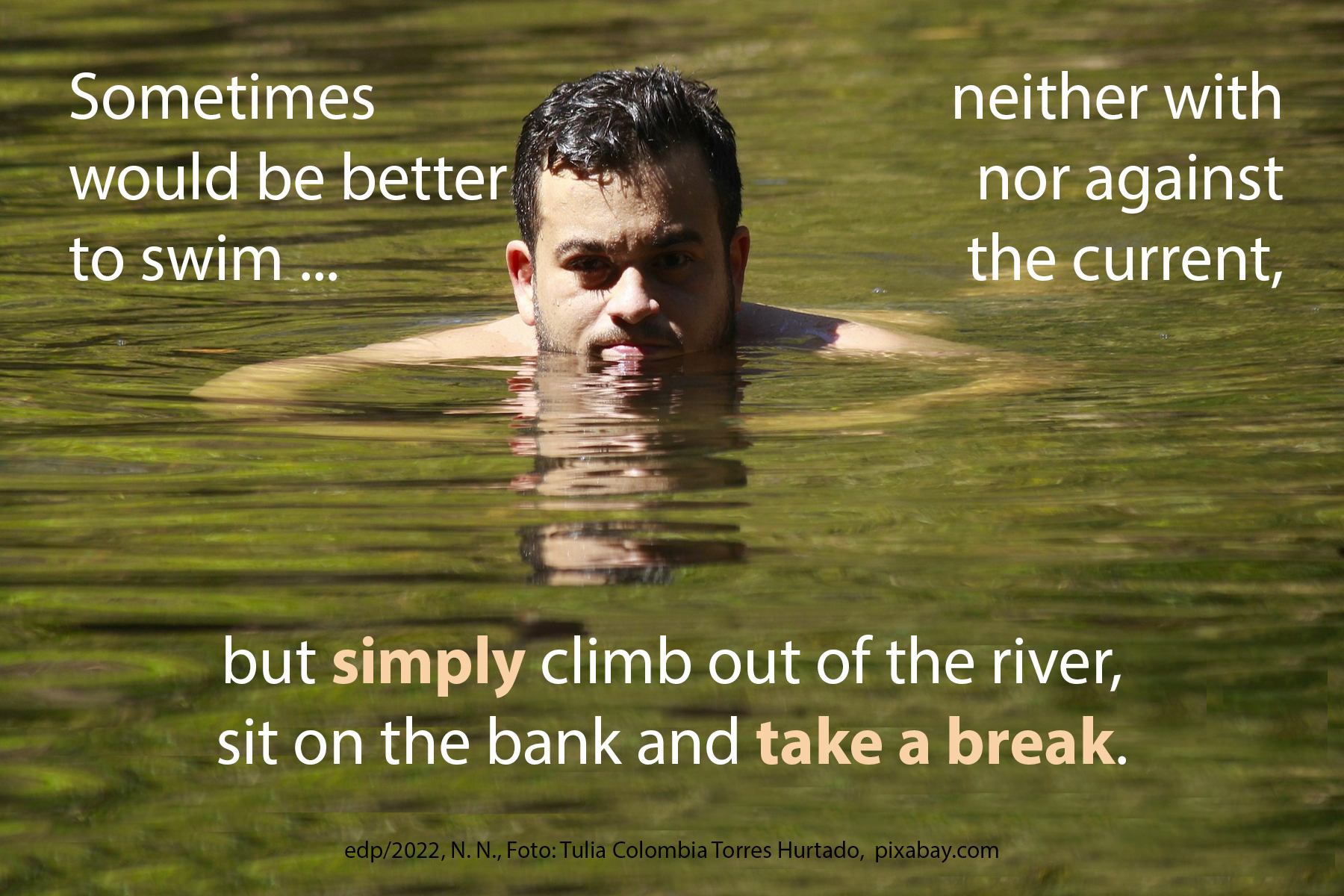
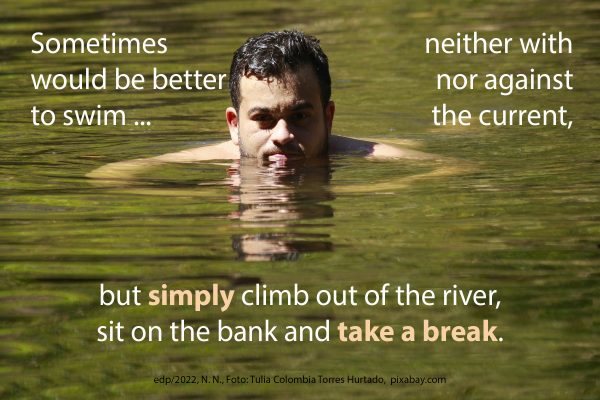
„Sometimes would be better to swim neither with nor against the current, but simply climb out of the river, sit on the bank and take a break.“ N.N.

The Sabbath is the best time for such a break. It is God’s most effective vaccine against the viruses of workaholism, indolence, narcissism and burnout.

What the Sabbath means to me, I tell in a video clip (3:19 min.), which I made for this year’s Evangelical Alliance Prayer Week in Lüneburg. It starts on January 9 and the theme is „The Sabbath: Living according to God’s rhythm„.

The wording of my video clip above:

My name is Elí and I belong to the Adventist church in Lüneburg for 30 years.

As a child, Shabbat lasted much too long for me: I grew up in a quite conservative family in Spain and we children were not allowed to do many things on this day that we enjoyed, such as playing football or swimming in the sea. So I was happy when Shabbat ended on Saturday evening.

But the older I got, the more I came to appreciate the Sabbath rest. As a student, for example, I was happy if I could leave the books and study material in the corner on that day without having a guilty conscience. Even during the whole day I didn’t have to think about it, but could really relax and recharge in church in the morning and in the youth group in the afternoon.

Later, in my professional life, I felt the same way. During the 25 years as a director of a publishing house, I took the unfinished work in the laptop home with me every day at the end of the working day, so that the nights were usually quite short. But on Sabbath, i.e. from Friday evening to Saturday evening, I didn’t touch the work. Voluntarily, no. Without feeling any pressure or having a guilty conscience, the Sabbath kept me from working through seven days – including the seven evenings.

Thus, in the course of my life, the day of rest has become more and more a liberating day for me – a true gift from God! A day to truly recharge in free time for my family, for God, in my church, in nature and much more.
I have been a pensioner for five and a half years now. One might think that I now have a permanent Sabbath. But that’s not the case when you have a fairly active retirement. So I look forward to this special day every week. When I was a child, it usually seemed too long, but now I regret that it is coming to an end so quickly.

I consider the Sabbath to be one of the greatest gifts God has given us humans, apart from Jesus Christ and his act of redemption, of course. Without Him, the Sabbath would be an ordinary holiday, filled with all kinds of side activities. Only through Jesus Christ and in connection with Him does this day become what the Creator set it aside for: a filling station for body, soul and spirit.

 abcd


Tómate un descanso. ¡Cada semana!

„A veces convendría no nadar ni a favor ni en contra de la corriente, sino simplemente salir del río, sentarse en la orilla y disfrutar de un descanso.“ (Autor desconocido)

El sábado es el mejor momento para ese recreo. Es la vacuna más eficaz que Dios ofrece contra los virus de la adicción al trabajo, la pereza, el narcisismo y el agotamiento (burnout).

Hablo de lo que significa el sábado para mí en un videoclip (3:19 min.) que grabé para la Semana de Oración de la Alianza Evangélica de este año en Lüneburg. Comienza el 9 de enero y el tema es „El sábado: vivir según el ritmo de Dios„.

Traducción de mi videoclip arriba:

Me llamo Elí y pertenezco a la iglesia adventista de Lüneburg desde hace 30 años.

Cuando era niño, el Shabbat duraba demasiado para mí: Crecí en una familia bastante conservadora en España y a los niños no se nos permitía hacer muchas cosas en este día que nos gustaban, como jugar al fútbol o nadar en el mar. Así que me alegraba cuando el Shabbat terminaba el sábado al anochecer.

Pero cuanto más crecía, más apreciaba el descanso sabático. Como estudiante, por ejemplo, era feliz si podía dejar los libros y el material de estudio en el rincón ese día sin tener remordimientos. Incluso durante todo el día no se me ocurría pensar en ello, sino que podía relajarme y recargar las pilas en la iglesia por la mañana y en el grupo de jóvenes por la tarde.

Más tarde, en mi vida profesional, sentí lo mismo. Durante los 25 años en que fui director de una editorial, cada día me llevaba a casa, al final de la jornada laboral, el trabajo inacabado en el ordenador portátil, por lo que las noches solían ser bastante cortas. Pero el sábado, es decir, desde el viernes por la tarde hasta el anochecer del sábado, no tocaba el trabajo. Sin sentir ninguna presión ni remordimientos de conciencia, el sábado me impedía trabajar durante los siete días, incluidas las siete noches.

Así, a lo largo de mi vida, el día de descanso se ha convertido cada vez más en un día liberador para mí, ¡un verdadero regalo de Dios! Un día para recargarme de verdad en el tiempo libre para mi familia, para Dios, en mi iglesia, en la naturaleza y mucho más.

Hace ya cinco años y medio que soy pensionista. Uno podría pensar que ahora tengo un sábado permanente. Pero ese no es el caso cuando se tiene una jubilación bastante activa. Así que espero con impaciencia este día especial cada semana. Cuando era niño, me parecía demasiado largo, pero ahora lamento que se acabe tan rápido.

Considero que el sábado es uno de los mayores regalos que Dios nos ha dado a los humanos, aparte de Jesucristo y su acto de redención, por supuesto. Sin Él, el sábado sería una fiesta ordinaria, llena de todo tipo de actividades secundarias. Sólo a través de Jesucristo y en conexión con Él, este día se convierte en aquello para lo que el Creador lo reservó: una estación de repostar para el cuerpo, el alma y el espíritu.